GN Separation, a global leader in solid-liquid separation equipment, recently announced the successful delivery and application of its GN Dewatering Screw Press to an overseas food processing plant, providing an efficient, eco-friendly solution for the plant’s wastewater and sludge treatment challenges. As the global food processing industry evolves, wastewater treatment has become a critical component of sustainable operation, and GN’s innovative equipment is helping international food plants achieve environmental compliance while optimizing operational costs.
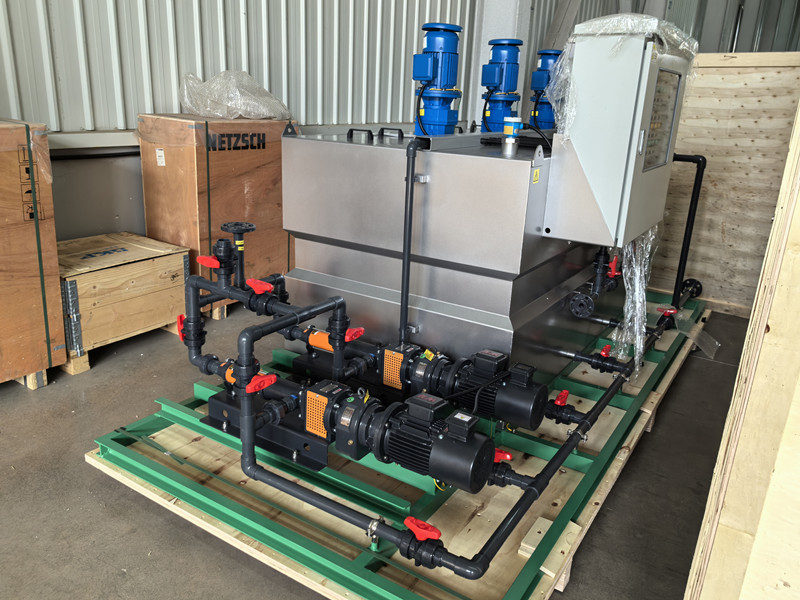
Food processing facilities typically generate wastewater containing high levels of organic matter, suspended solids, grease, and sludge, which pose significant challenges for treatment efficiency and environmental compliance. Traditional sludge dewatering equipment often suffers from high energy consumption, frequent clogging, and high maintenance costs, making it difficult for food plants to balance operational efficiency and environmental responsibility.
Tailored to address these pain points, the GN Dewatering Screw Press adopts an advanced screw extrusion principle, leveraging the strong squeezing force generated by the change of screw diameter and pitch, along with the tiny gap between floating and fixed rings, to achieve efficient solid-liquid separation. The integrated system consists of a fully automatic control cabinet, flocculation preparation and mixing unit, sludge thickening and dewatering device, and filtrate collection tank, enabling fully automated flocculation, continuous sludge thickening, and dewatering without manual intervention.
Key advantages of the GN Dewatering Screw Press make it particularly suitable for food plant applications. It operates continuously and automatically with an anti-clogging design—powered by the rotation of the screw shaft that drives the floating ring to clean the filtering gap, ensuring stable long-term operation. The equipment is energy-efficient, consuming 30%-50% less power than traditional centrifuges, and features a compact design that minimizes footprint, making it ideal for food plants with limited space. Additionally, it boasts low investment and operational costs, no secondary pollution, and can dewater sludge under aerobic conditions to avoid phosphorus release from anaerobic dewatering.
For the overseas food plant, the GN Dewatering Screw Press has delivered tangible results. The equipment effectively treats food sludge, reducing the moisture content of the discharged sludge cake to below 80%—the treated solids can be repurposed for animal feed production, while the recovered filtrate is reused for equipment cleaning, realizing resource recycling and cost savings. To enhance dewatering performance, GN also provided a fully automatic PAM Dosing Unit, built with stainless steel, which injects flocculant to aggregate fine particles, improving solid-liquid separation efficiency and ensuring clearer filtrate.
“With the growing global focus on environmental sustainability, food plants are under increasing pressure to optimize wastewater treatment processes,” said a senior representative of GN Separation. “Our Dewatering Screw Press is designed to meet the unique needs of the food processing industry—combining reliability, efficiency, and cost-effectiveness to help our overseas clients achieve their environmental goals while improving operational efficiency.”
GN Separation, part of the GN Group, has established a strong global presence with branches in China, the USA, UAE, and Australia, enabling timely delivery and technical support for international clients. Thecompany’s dewatering equipment is widely used in municipal, aquaculture, food, pharmaceutical, and chemical industries, demonstrating its versatility and reliability across diverse applications.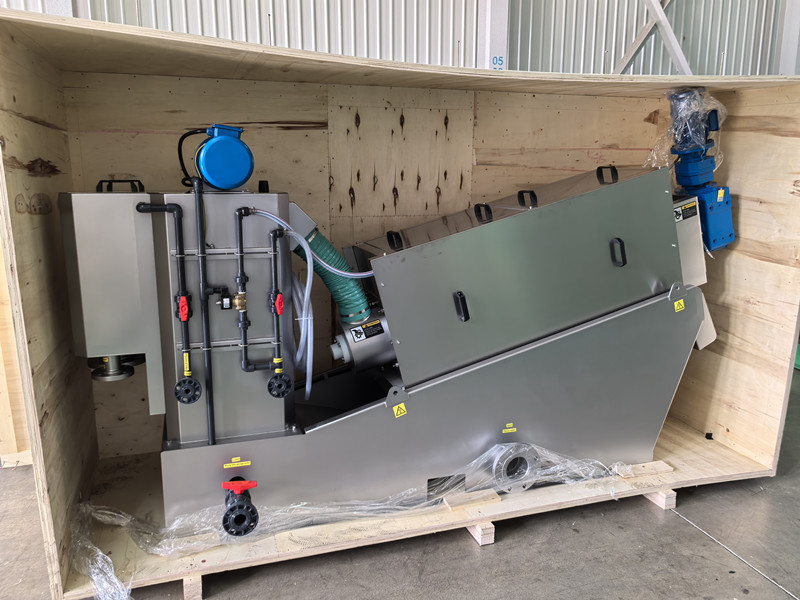
This project marks another milestone in GN Separation’s commitment to providing innovative solid-liquid separation solutions for the global market. As the food processing industry continues to prioritize sustainability, GN’s Dewatering Screw Press is poised to become a go-to solution for overseas food plants seeking efficient, eco-friendly, and cost-effective wastewater treatment.